THIS IS NOT A PLACE OF HONOR
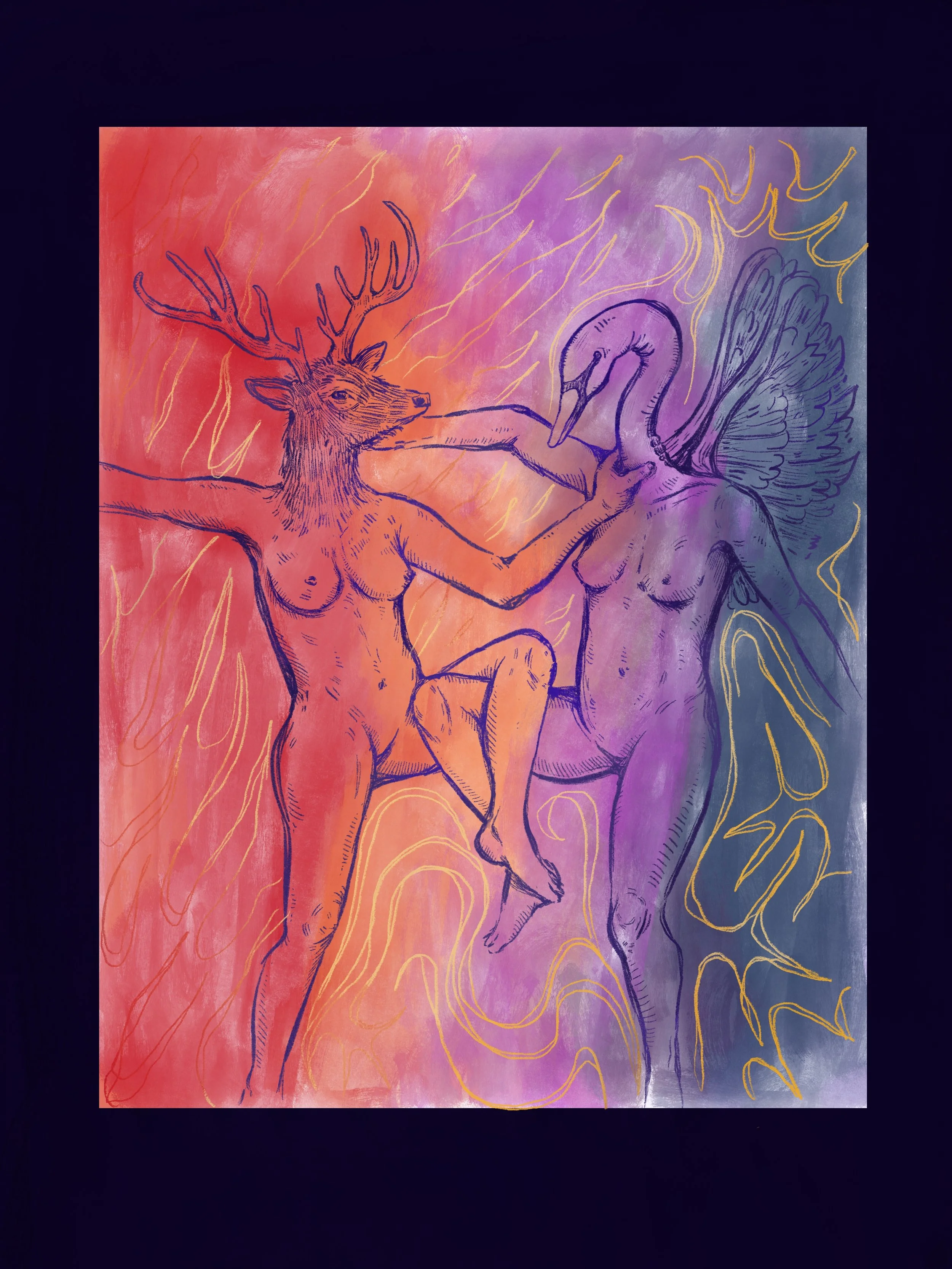
And doesn’t that sound so nice? Isn’t it so easy to make the terrible lovely?
“Hit me,” I tell her. It’s April. The windows are shut, rickety enough around the edges to let insects in every now and then. A housefly. A mosquito. A moth, all hairy under the moonlight. We’ve got blankets on the floor, warm alcoves in our elbows, our knee pits, our necks. The night has moved to a later stage—past the laptop movie, past the socks tangled by the door, past the awkward clothing-shimmying and dental dam peeling. We aren’t doing much except for not being asleep. It’s like a slumber party, the kind where you giggle and whisper to one another from your spots on the floor. Kiss, marry, kill? Who in our grade is the worst?
Hit me.
She props herself up on her elbows. “What?”
I don’t repeat myself. There is no need to. She knows what I said. Really, it’s been a good relationship. Simple, almost boring in its goodness. She likes eight-dollar croissants, thrift stores, and forcing me to wake up early for sunrise walks. She’s open-hearted. Kind. I don’t have to upend it like this.
But the history of love is a history of endings: often brutal, often long and dragged across the dirt. Perfect couples were perfect only because they were frozen in place; a slide on a film reel, caught at the moment of ultimate matrimony, unchanging forever. Happy permanence meant stagnancy.
I am not stagnant. I am not happy. As much as I wish I liked wandering through thrift stores and rising before the sun does, it all feels fake, a veil over reality. It is like trying to domesticate a wild thing from the forest. Trying to fix a nature that refuses fixing. A nature that, all else aside, whispers its constant song in my ears: Things can only last if they hurt.
*
I tell her a story. It’s 1530-something, daylight failing to break through the gray mist over London proper. A candle burns itself down to nothing on the king’s bedside. His eyes are on the woman lying next to him, whose eyes are on nothing; she sleeps soundly, the guttering candlelight curving across her cheek. Her hair is loose, her face unstrained, the fur-lined blanket hitched all the way up to her chin. The king is figuring out how to kill her.
It’s not the absence of love, but the presence of anger. Too many factors at play—affairs, barrenness, the passing of time making her less beautiful, like a delicacy eaten too often. It was always going to happen. When she’d given him her hand, she’d already died.
The wax is a mess on the bedside, beeswax spoiling, honey scent corrupted, oil stained black.
*
Now, in April, she kicks off the slumber party blankets. “What does this have to do with anything?” she says.
I can’t answer. I wish I could make it clear to her without using words. I wish she would hit me.
She’d already smacked my shoulder, exasperated, and said, “There. Done.” But I shook my head. It wasn’t enough, I argued. The world is still on its axis. Don’t you see how the world is still on its axis?
*
Forget royal tragedies, then, I tell her. Forget Shahryar and Anne Boleyn, Othello and Desdemona, Sarah Churchill and the Villiers and Sso-Sang behind her mistress’s folding screen after dark. Let’s go to Ancient Greece. Semi-Ancient Rome. The coasts of Carthage. You know, back when pollution hadn’t plucked the diamonds out of the sky and the only light to see by was the moon’s blue reflection on laurel trees. People were turning each other into beasts. Swans, bears, cows, deer. Destroying their favorite beauties. Tracing each other’s outlines and shoving them into the stars. The story was the same everywhere; you could cover the earth with broken, slimy, animal hearts. And doesn’t that sound so nice? Isn’t it so easy to make the terrible lovely?
We can’t stay human forever, I tell her. The other shoe has to drop eventually. I’m just baring my neck for its sole.
*
More cajoling. Excuses. There are a lot of excuses I can give, partial motivations, fractions that don’t add up to a whole. My arguing parents. My internalized misogyny. My favorite TV shows with their problematic leads. My fear of rejection, of disappointing the people who thought they loved me and will one day find out that whatever they saw, whatever they admired in me was smoke and mirrors. Or my anger at everything. The whole world, all the time, hopelessly, irrevocably on fire. I want to inject love with hate, with violence, to make it like everything else. To remove the most frightening thing about it, that being its unconditional goodness. To never be naked without a little blood on, which is to say, to never be naked at all.
Or maybe it’s just masochism. If you think of it that way, is it alright? Please?
Her face has taken on the ashen color of polluted skies. The window cages us in; the night will not end without this ending first. I won’t let it. Don’t be afraid, I want to say to her. I’m the toxic one, not you. I am crueler right now than you can ever be. Don’t you see? I am the monster. You can be Scheherazade. When the climax is over, when the last act of the play closes, you can be the one to run away free.
I don’t know if she hears me. But she lifts the blade of her hand. She closes her eyes.
*
Ten thousand years after us and Shakespearean tragedy and the last Greek lover’s constellation, a net of spikes stands above a stark and barren earth. Underneath the mound, encased in basalt, barbed wire, and black-dyed concrete are millions of tonnes of barely-degrading, highly radioactive nuclear waste. We have already started generating it. It will not go away in a thousand lifetimes.
How do you warn a civilization inconceivably far down the line of a monster that will outlive you by orders of magnitude? Per the proposal of researchers, you do it with a dozen granite signs barring entry to the storage heap. A warning is etched in seven languages, cautioning against seeking further, against the poison, against painful liquid death. Most of the lines are simple and sensible. Some are stranger. THIS PLACE IS NOT A PLACE OF HONOR, one reads jaggedly. NO HIGHLY ESTEEMED DEED IS COMMEMORATED HERE. NOTHING VALUED IS HERE. It warns, and it warns, and it warns. It tells you about the monster buried deep beneath the soil of living things and minds and breath.
THE DANGER IS UNLEASHED ONLY IF YOU SUBSTANTIALLY DISTURB THIS PLACE PHYSICALLY, it concludes. Her hand is shaking. She can’t do it. THIS PLACE IS BEST SHUNNED AND LEFT UNINHABITED.
*
There are endless universes. One where we stay together. One where we break up, but choose to remain friends. One where I don’t ruin things on purpose. One where she hits me.
This is none of them. Sunlight breaks over the sill, a rotten egg yolk, veiny white and black. The floor under my head is hard. She’s sniffling, braiding the carpet tassels, unsure of what to say. I think if I close my eyes now, I might sleep forever.
Some spots in Chernobyl will be dangerous for as long as we know their names. So radioactive that nothing but millennia can soothe the rage away. And some spots have already grown flowers. Proud, greenish yellow things, absent of human culling, venturing on past the end of the final act. They extend freely. They do not know pain, or happiness, or the estranged definition of eternity. They pay no attention to their place in the theater. They ignore the spotlight going out. What would they do, even if they cared, even if it mattered? The curtains have closed. The audience is silent. The blankets are cold.
AUTHOR: Lizzy Sazegari
ARTIST: Olivia Falk